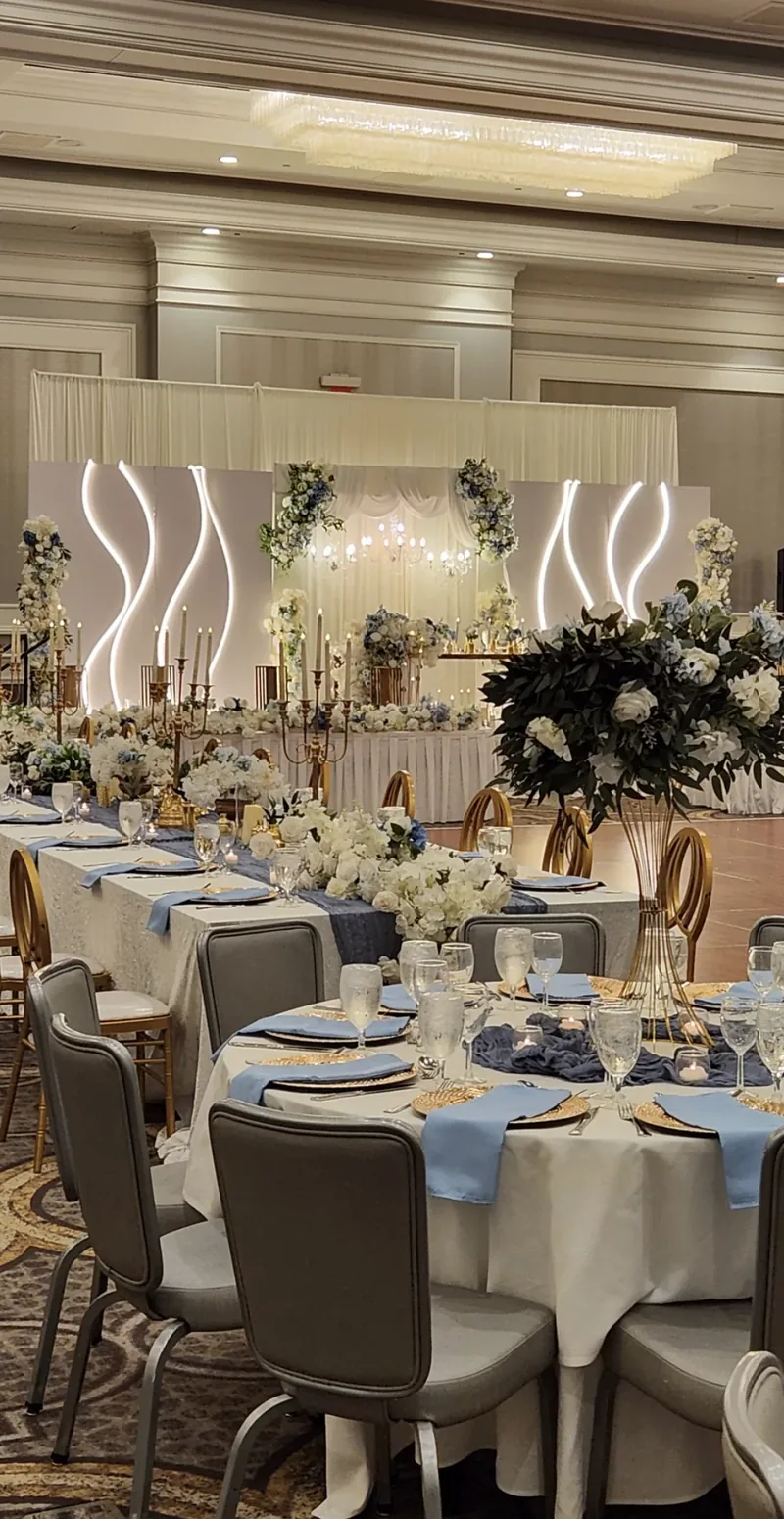
Corporate event décor covers the stage, backdrop, entrance, lighting and table styling that set the look of a gala, launch or holiday party. Events By Maryam is a Columbus, Ohio décor studio that designs and installs it; event décor starts at $1,500, and full gala styling is quoted separately.
Corporate events are undergoing a design renaissance. Gone are the days of generic ballrooms with basic centerpieces and a podium. In 2026, companies are investing in intentional, immersive event design that reflects their brand values, engages attendees on a sensory level, and creates lasting impressions that extend far beyond the event itself.
As a corporate event decorator in Columbus, Ohio, we've seen these shifts firsthand — from corporate galas to nonprofit fundraisers and company launch events. Here are the most significant corporate event decoration trends defining 2026.
1. Sustainable Luxury: Eco-Conscious Without Compromise
Sustainability is no longer a nice-to-have — it's an expectation. But in 2026, sustainable event design doesn't mean sacrificing aesthetics. The trend is sustainable luxury: events that are both environmentally responsible and visually stunning.
What This Looks Like in Practice
- Living florals and potted plants — centerpieces featuring living plants that can be donated, replanted, or given to attendees as favors after the event
- Reusable décor systems — modular staging, fabric panels, and lighting rigs designed to be used across multiple events
- Local and seasonal flowers — sourcing from Ohio growers reduces carbon footprint while supporting local agriculture
- Digital over physical — LED walls and projection replacing printed banners and single-use signage
- Sustainable materials — bamboo structures, recycled glass vessels, natural fiber linens, and soy-based candles
- Zero-waste table design — edible centerpieces, compostable elements, and minimal packaging
Companies that visibly commit to sustainable event practices signal their values to employees, clients, and stakeholders. It's brand building through design choices.
2. Immersive Themed Environments
The biggest shift in corporate event design is the move from decorated spaces to immersive environments. Instead of adding decorative elements to a venue, designers are transforming entire spaces into themed worlds that attendees step into.
Elements of Immersive Design
- Multi-sensory experiences — combining visual design with curated soundscapes, scent design, and tactile elements
- Theatrical staging — dramatic entrances, reveals, and transitional moments that guide attendees through a narrative
- Environmental projection — using projection mapping to transform walls, ceilings, and floors into dynamic visual landscapes
- Interactive installations — art pieces, digital touchpoints, and experiential stations that encourage engagement
- Zone-based design — creating distinct areas within a single venue, each with its own atmosphere and purpose
For example, a tech company's annual summit might feature an "innovation corridor" entrance with interactive light installations, a main keynote space with cinematic projection mapping, networking lounges themed around different product lines, and an evening gala with a completely different aesthetic. Each zone tells part of the company's story.
3. Branded Environments That Go Beyond Logos
Brand integration in event design has matured dramatically. In 2026, it's not about slapping logos on everything — it's about embodying brand identity through design language.
Sophisticated Brand Integration
- Color psychology — using brand colors strategically in lighting, florals, and linens to create subconscious brand association
- Typography as design element — brand fonts in signage, menus, and projected content
- Material alignment — a tech company might use sleek metals and clean lines; a luxury brand might feature rich textures and gold accents
- Story-driven design — décor that reflects the company's history, mission, or the specific event's theme
- Subtle rather than overt — custom-shaped centerpieces, branded patterns in linens, and logo integration that feels organic rather than forced
The goal is for attendees to feel the brand without being hit over the head with it. When done right, branded event environments create emotional connections that traditional marketing can't match.
4. Warm Minimalism and Organic Luxury
The cold, ultra-modern corporate aesthetic is giving way to warm minimalism — clean, sophisticated design that feels human and inviting rather than sterile. This trend reflects broader cultural shifts toward authenticity and comfort.
- Natural materials — wood, stone, linen, terracotta, and dried botanicals
- Earth tones — warm neutrals, clay, sage, terracotta, and cream replacing stark black and white
- Organic shapes — curved lines, asymmetrical arrangements, and flowing forms
- Candlelight and warm lighting — moving away from harsh spotlights toward ambient warmth
- Textural layering — combining different fabrics, surfaces, and materials for depth and interest
- Intentional negative space — letting design breathe rather than filling every surface
This approach works particularly well for intimate corporate dinners, executive retreats, and client appreciation events where the goal is fostering connection over spectacle.
5. Technology-Enhanced Experiences
Technology continues to expand what's possible in corporate event design, but the 2026 approach is about seamless integration rather than technology for technology's sake.
- LED video walls — replacing traditional backdrops with dynamic, content-rich displays that can change throughout the event
- Projection mapping — transforming venue architecture into animated canvases for keynotes and reveals
- Kinetic installations — motorized elements that create movement and visual intrigue
- Interactive digital elements — QR-triggered experiences, AR overlays, and real-time social media integration
- Smart lighting — DMX-controlled systems that shift color, intensity, and pattern to match the event's energy
The key is that technology serves the design vision rather than dominating it. The most successful events in 2026 use tech to enhance human experiences — making connections easier, stories more vivid, and moments more memorable.
6. Experience-First Entertainment Zones
Corporate events are moving beyond the standard "cocktails and keynote" format. In 2026, event design includes dedicated experience zones that give attendees choices in how they engage:
- Interactive food stations with chef demonstrations and live cooking
- Craft and wellness corners — mixology classes, calligraphy stations, or guided meditation spaces
- Photo and content creation areas — professionally designed settings that encourage social sharing
- Quiet networking lounges — intimate, beautifully designed spaces for meaningful conversations
- High-energy zones — entertainment and dance areas with immersive lighting and sound
Each zone requires intentional design that creates a distinct atmosphere while maintaining visual cohesion with the overall event.
7. Cultural Celebration Integration
As workplaces become more diverse, corporate events in Columbus increasingly celebrate cultural richness. Events honoring Diwali, Eid, Lunar New Year, and other cultural moments require authentic, respectful décor design that elevates traditional elements with contemporary luxury.
This trend extends to corporate celebrations that honor the cultural backgrounds of employees and clients — from holiday parties that represent multiple traditions to product launches tailored for specific cultural markets. Our experience with South Asian and multicultural celebrations uniquely positions us to design these events authentically.
Bringing These Trends to Your Next Event
Whether you're planning a corporate gala, annual conference, product launch, fundraiser, or executive retreat in Columbus, these trends offer a roadmap for creating events that truly resonate with attendees. The common thread across all of them is intentionality — every design decision serving a purpose, every element contributing to a larger story.
At Events By Maryam, we bring the same attention to detail and design excellence to corporate events that we're known for in luxury weddings. Our corporate event design services cover everything from intimate executive dinners to large-scale galas and conferences across Ohio.